

















This blog argues that sustainable governance depends on an operating model that keeps humans accountable for AI-assisted decisions, lets control requirements shape tool choice, and matches deployment architecture to regulatory and ownership needs.

Enterprises face sprawling identity environments where SaaS growth, cloud change, non-human identities, and AI agents make periodic reviews and manual workflows too slow to control risk. Identity governance and administration is shifting from a compliance project to a continuous operating model, where event-driven automation, risk-aware decisions, and real-time visibility reduce friction while keeping governance aligned with fast-moving business change.
Identity governance has become harder over the last few years.
Enterprise environments are more distributed. Access relationships change constantly. SaaS ecosystems continue to expand. Non-human identities, automation workflows, and AI agents are introducing entirely new governance challenges. At the same time, security and IAM teams must improve control and reduce risk without slowing the business down.
Many organizations are still trying to manage this complexity through a mix of email approvals, ticket queues, spreadsheets, disconnected workflows, and periodic review campaigns that were never designed for the scale and speed of today’s identity environments.
That operational gap is impossible to ignore.
The 2026 KuppingerCole Leadership Compass for Identity Governance and Administration reflects this shift clearly, highlighting the growing importance of event-driven lifecycle management, continuous risk evaluation, workflow automation, and access intelligence within modern IGA programs. The report notes that next-generation IGA is moving toward “dynamic, real-time, and continuous governance rather than periodic and static control mechanisms.”
For many enterprises, this is no longer simply a governance modernization initiative. It is an operational necessity.
For years, many organizations approached IGA primarily as a compliance exercise.
The goal was often straightforward:
Those requirements still matter. But the operating environment has changed dramatically.
Today, organizations are trying to govern access across hundreds of SaaS applications, cloud platforms, legacy systems, DevOps environments, third-party users, service accounts, bots, and increasingly AI-driven workloads. Access changes constantly, and governance teams are under pressure to respond faster while reducing manual effort.
The result is that many governance programs are now struggling operationally, not just technically.
Common challenges include:
In many environments, the hidden cost of IGA is no longer licensing. It is the operational overhead required to maintain connectors, workflows, policies, certifications, and integrations as the environment continuously changes.
Listing these problems is easy. The harder question is what actually fixes them. Continuous governance changes each one:
The pattern is the same in every case. Move routine work to policy and automation. Save human attention for real risk.
This is one reason why many organizations underestimate modern IGA programs.
IGA is no longer a project with a clear end date. It is an operational capability that must evolve continuously alongside the business.
The shift toward continuous governance is not simply about running certifications more frequently or automating existing workflows.
It represents a broader change in how governance operates.
Traditional governance models were built around periodic reviews and human-driven approvals. Modern environments increasingly require governance models capable of responding dynamically to events, risk signals, lifecycle changes, and entitlement activity in near real time.
That includes:
Importantly, the goal is not to automate everything indiscriminately.
The more mature approach is reducing manual governance effort while escalating meaningful risk to the appropriate reviewers and approvers.
Many organizations are now seeing that the challenge is no longer whether governance policies exist. The challenge is whether governance can operate fast enough, and efficiently enough, to keep pace with how access changes across the business.
Without greater automation and operational scalability, governance teams risk spending more time administering governance processes than improving governance outcomes.
At Omada, we believe the future of identity governance will be defined less by periodic compliance activity and more by continuous operational execution.
Many organizations still think about governance as a project: implement a platform, onboard applications, run certifications, and maintain compliance. But modern identity environments do not stand still. Applications change. Access changes. Risks change. Ownership changes. New identity types keep emerging, including service accounts, workloads, bots, and AI agents.
Governance must evolve with them.
This is why we believe governance is becoming an operating model rather than a project. The organizations making the most progress are building governance into day-to-day operations through automation, policy-driven controls, and continuous decision-making. They are not just running governance more often. They are making governance part of how the business runs.
We also believe the industry sometimes overemphasizes intelligence and underemphasizes execution. Analytics, recommendations, and AI can provide valuable insights, but identity intelligence without operational workflows does not reduce risk. A recommendation does not revoke access. A dashboard does not fix a control gap. A risk score does not satisfy an audit unless it leads to action, workflow, and evidence.
That is the point. Modern governance is not just about seeing more. It is about acting faster, with better context, stronger controls, and less friction.
The goal is not to automate everything. The goal is to reduce friction, eliminate unnecessary manual effort, and ensure that people are involved when human judgment adds value. Governance should reduce noise, not create it. Low-risk access changes should move through policy. High-risk decisions should reach the right owner with the right context.
Ultimately, the challenge facing most organizations is not a lack of governance controls. It is making governance scalable enough to keep pace with the business. The future of IGA belongs to governance models that are continuous, adaptive, embedded, and actionable.
One of the most common misconceptions is that modern IGA becomes easier simply because it is cloud delivered.
In reality, the complexity often shifts rather than disappears.
Identity data still needs to be cleaned, mapped, reconciled, and governed consistently across systems. Applications still need to be onboarded. Policies still require tuning. Roles still need to evolve alongside organizational change.
Organizations frequently underestimate:
Many enterprises also continue to think about governance primarily through quarterly campaigns and ticket queues, while modern IGA increasingly relies on continuous signals, automation, and policy-driven decision making.
This is also changing how organizations think about governance scope itself.
Historically, many programs focused primarily on employees and a relatively small set of core business applications. Today, governance increasingly extends to contractors, partners, cloud infrastructure, SaaS administration, service accounts, workloads, bots, and AI agents. These are areas where access changes more dynamically and traditional joiner/mover/leaver thinking is often insufficient.
The organizations making the most progress with modern IGA programs typically approach governance differently.
First, they treat governance as an operational program rather than a one-time implementation project.
Successful organizations usually avoid trying to solve everything at once. Instead of pursuing large, multi-year “big bang” deployments, they focus on phased delivery, measurable outcomes, and operational maturity over time.
They also invest heavily in standardization and onboarding discipline.
Application onboarding, for example, increasingly needs to function as an industrialized process rather than a series of custom integration projects. Organizations that cannot scale onboarding efficiently often end up with governance gaps, growing application queues, and inconsistent policy coverage.
Operational ownership matters as well.
Programs tend to struggle when governance remains concentrated within a small group of technical specialists. The more successful models distribute governance responsibilities appropriately through delegated administration, business ownership, standardized workflows, and business-friendly user experiences.
This becomes especially important as organizations attempt to govern larger identity ecosystems without proportionally increasing administrative overhead.
The strongest programs are also increasingly combining automation with audit-ready visibility. The reduce manual work while maintaining strong reporting, traceability, and policy enforcement.
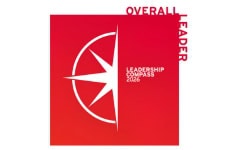
These broader market shifts are reflected throughout the 2026 KuppingerCole Leadership Compass for IGA, where Omada was recognized as an Overall Leader in the market.
In its assessment of Omada, KuppingerCole highlighted strengths including:
Those areas align closely with the direction many enterprises are now prioritizing as they modernize governance operations.
KuppingerCole also noted that Omada is “well suited for organizations that want full-spectrum IGA with partner-led delivery, strong workflow configurability, and expanding AI-assisted user interaction, especially where real-time signal consumption is a key requirement.”
For us, the emphasis on real-time signal consumption is particularly important because it reflects one of the most significant shifts occurring across the IGA market. It is the engine of continuous governance. Reading signals as they happen, acting on the routine ones automatically, and surfacing the rest for a human is how governance keeps pace with the business instead of trailing weeks behind it.
Identity governance is evolving beyond static controls and periodic review exercises.
As identity ecosystems continue to expand, governance models increasingly need to operate continuously — consuming signals, adapting to change, automating low-risk decisions, and focusing human attention where risk is highest.
Automation and intelligence are becoming foundational.
Organizations need governance models that scale operationally, not just technically.
And increasingly, the challenge for enterprise IGA programs is not whether governance exists, but whether governance can keep pace with the business itself.
Analyst Report
The 2026 KuppingerCole Leadership Compass for IGA evaluates the leading vendors across the market.
FREQUENTLY ASKED QUESTIONS
Continuous governance means identity governance operates through ongoing signals, lifecycle changes, and entitlement activity instead of relying mainly on periodic reviews and static controls. This model includes event-driven provisioning, automated policy enforcement, continuous reconciliation, and risk-aware decisions that help governance keep pace with constant access change.
Many organizations are rethinking identity governance because enterprise environments have become more distributed, SaaS ecosystems have expanded, and new identity types such as service accounts, bots, workloads, and AI agents are adding complexity. The blog says many teams still rely on email approvals, tickets, spreadsheets, and disconnected workflows, which creates operational strain and slows governance.
Continuous governance improves operations by triggering reviews on risk signals instead of fixed calendars and by moving routine work into policy and automation. That means low-risk access changes can be handled automatically, while higher-risk requests are escalated to the right reviewer with context, which helps reduce bottlenecks and review fatigue.
The challenge is no longer only to document approvals, complete certifications, and satisfy audit requirements, even though those remain important. Governance must also be scalable and actionable, because controls and risk scores only matter when they lead to workflows, decisions, evidence, and timely remediation.
Ssuccessful identity governance and administration (IGA) programs treat governance as an operational program rather than a one-time project. They focus on phased delivery, standardized application onboarding, delegated ownership, automation, and audit-ready visibility so governance can expand across more applications and identity types without adding the same level of manual overhead.
FEATURED RESOURCES
This blog argues that sustainable governance depends on an operating model that keeps humans accountable for AI-assisted decisions, lets control requirements shape tool choice, and matches deployment architecture to regulatory and ownership needs.
Enterprises are embedding identity governance into Zero Trust and AI operations, but most still measure activity more easily than risk reduction, leaving leaders confident without clear proof of control effectiveness.
This blog explores how organizations can govern AI agents through defined authority, runtime oversight, and auditability.